
What no single
model can think.
Metamorfon — orchestrated dialogue and reasoning between AI models
Metamorfon is a desktop application that orchestrates structured debates between several AI models and analyzes how they unfold.
Turn confrontation between models into a tool for critical scrutiny and a laboratory where concepts take shape or recombine.
Beyond the single AI model
Disagreement between models is a feature, not a problem. Metamorfon turns LLMs into interlocutors in a structured debate — rather than mere sources of answers to compare. The difference is not technical: it is conceptual.
A single AI model, however powerful, thinks from a single configuration — and tends to favor fluency over friction, agreement over contradiction.
Metamorfon works on the opposite principle: setting models in dialogue, combination, or confrontation. Tensions become data. Disagreements, leverage.
The result is sharper, deeper thinking — closer to academic discourse than to an assisted conversation.
Spaces for Inquiry
Critical scrutiny tests, the laboratory recombines: every session works on both levels. Six spaces to step into.






Explore
Map before you commit.
Compare how models frame the same prompt — what they notice, what they ignore, how their reasoning diverges. Surface unknowns, generate hypotheses, collect directions.
Clarify
Define the question.
Make your problem explicit — define it, scope it. Models detect blind spots and sliding concepts, turning a vague question into a structured problem you can actually work with.
Confront
Stress-test until only the robust survives.
Models refute, invert, and challenge inconsistencies. Confrontation is not about winning — it is where reason emerges from friction and honest trade-offs.
Produce
Turn thinking into a reusable deliverable.
Generate a framework, a rule set, an analysis or a shared definition. Instead of circling a topic, models converge on structured, portable output.
Measure
Assess the effects of the exchange.
Track tokens, costs, interaction depth — and let a third-party model dissect the dialogue: agreements, tensions, biases, blind spots. Not a verdict — an X-ray.
Decide
Translate uncertainty into a next step.
Options, criteria, trade-offs, recommended path — models help arbitrate what matters. The outcome is a decision you can justify — and an action you can take.
Contradiction is the root of all movement and life.
G.W.F. Hegel
Features

Dialogue Architectures
Six strategies, one principle: no AI model thinks alone. Every architecture sets models in structured exchange. The instructions follow the same principle: shape the exchange without pre-writing its conclusion.

Debate Modes
Adjust the register of the debate. In adaptive architectures, five modes shape how models respond to one another — from convergent mode, which seeks agreement and common ground, to refutational mode, which challenges frameworks and presuppositions. Between the two, constructive, balanced and critical modes modulate the form and degree of confrontation.

Analysis Modes
Eight ways to read what the dialogue produced: Meta-Analysis, Tension Mapping, Emergence Analysis, Integrative Synthesis, Horizon of possibilities, Critical Archaeology, Argumentative Evaluation, Source Verification. Each mode reveals a different layer.
Control, Transparency & Portability
Every parameter visible. Every session portable. Adjust temperature per model, enable web access, and track tokens and costs in real time. Export in Markdown, Word, or JSON snapshot — and reimport any session to continue or share it.
Where multi-model dialogue matters
Thinking alone means agreeing with yourself too quickly. Metamorfon is not a generalist AI assistant — it is a tool designed for complex questions and cognitive contexts where structured multi-model dialogue produces what no other approach can.
See what a model is, not just what it does
Benchmarks measure performance. They don’t reveal a model’s epistemic style, its implicit axioms, or its systematic blind spots. Provider diversity multiplies the points of comparison; structured dialogue makes them observable, and the analyses map them.
Understand what is at stake before deciding
High-stakes decisions involve competing value systems and positions that are often poorly mapped. Metamorfon makes the argumentative landscape visible — how the positions fit together and what they are grounded in — before a decision is made.
Generate new conceptual frames
Confronting opposing frameworks does more than accelerate conceptualization. It can shift the starting categories and produce distinctions, hypotheses or concepts that were absent from the initial responses.
Find an argument’s breaking points
Every argument, thesis, or investigation has zones it cannot defend — not because its author is wrong, but because every frame of reference generates its own blind spots. Critical and refutational dialogue finds them before a jury, a peer reviewer, or your adversaries do.
Journal
Design principles and lessons from the sessions.
Metamorfon, an Instrument of Thought
Plurality is not proof. It gives error more chances to be noticed. And testing an idea sometimes transforms it.
Making Two AIs Debate: A Method, Not a Spectacle
Wiring two AIs to each other only shows that they can talk. The method begins when we trace how an objection shifts a position.
The Spirit of the Instructions
An instruction should say as little as possible about the conclusion it expects. It prescribes a form and leaves the content to the debate.
Published Sessions
Dialogues and trilogues conducted in Metamorfon, published in full.
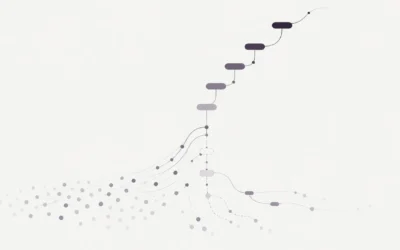
AI Job Loss by 2040: Can Economies Adapt — and What Happens to Entry-Level Jobs?
By 2040, AI is more likely to strand specific cohorts, occupations and places than to collapse aggregate employment: three models reached this central scenario despite opposite verdicts.
This Metamorfon session put ten successive questions to three AI models (GPT-6 Sol, Claude Sonnet 5.5, Grok 4.7), each question taking up what the previous answers had left open.

Billionaires and Political Power: How Wealth Becomes Power
Does extreme wealth buy more of what ordinary wealth buys, or something different in kind? Asked to GPT-5.6 Terra, Kimi K3 and Grok 4.7, the question first gets a unanimous answer: different in kind.
The session then tests that answer against a simple figure: the owner of a company town. Leaving, writing the rules, deciding alone: each power attributed to billionaires already exists at the scale of a single town.
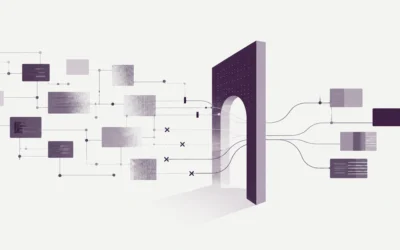
Banned Words in US Research Funding: What the 2025 Terminations Revealed
In 2025, several US federal agencies used keyword lists to flag research grants for review, suspension or termination, and researchers began substituting vocabulary to preserve fundability.
Asked what follows if research nomenclature exists through its funding, three AI models rejected the ordinary two-step picture — object first, funding second — in a single uncoordinated turn.
Start with a question that won't resolve
Free Trial — 14 days
€0 today, then €30/month incl. VAT
14 days free trial (card required)
Automatically converts to monthly billing after the trial
Cancel anytime